
Agricultural tyres during harvest: prevent overloading and slip
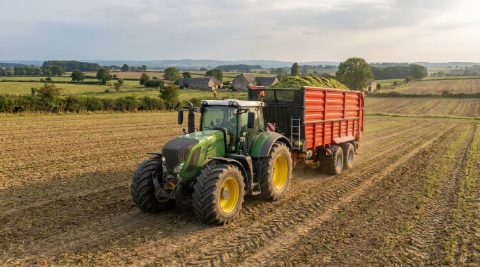
This places high demands on agricultural tyres. A tyre pressure that is suitable for an empty machine may be too low at full load. Conversely, a high pressure for road transport can reduce soil contact in the field and increase slip.
That is why load, load capacity, tyre pressure and speed must be properly matched.

This article was written by Gerrit Jonker
Gerrit Jonker is an Agricultural Account Manager at Profile Heuver and has been active in the tyre industry since 1983. He is also a trainer at VakMans, Heuver’s training centre. With his many years of hands-on experience, he shares his knowledge with customers and new tyre specialists.
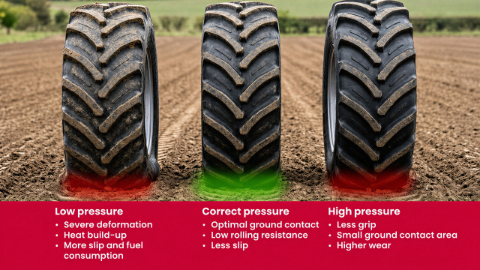
Field and road use require different tyre pressures
In the field, an appropriately low pressure benefits the contact area and traction. On the road, speeds are higher and a higher pressure may be necessary to prevent excessive deformation and heat build-up.
If you frequently switch between field and road use, a tyre-pressure control system can be a solution. Heuver offers the Float Control tyre-pressure control system, which allows you to adjust tyre pressure from the cab to suit the application.
Do not forget the tyres under the harvest trailer
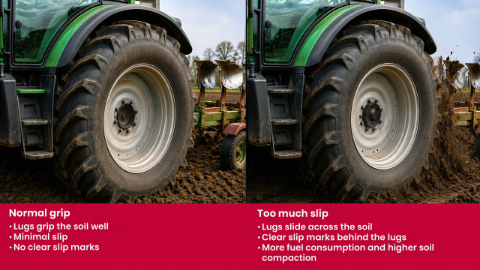
When a tractor slips, the cause is not always the tractor tyres. A heavily loaded silage trailer or tipper that creates deep ruts causes more rolling resistance. The tractor must therefore deliver more tractive force and reaches the limit of available traction sooner.
Therefore, also check the load capacity and tyre pressure of the towed agricultural equipment.
Implement tyres and flotation tyres can help distribute the load over a larger contact area. Many brands now also offer these tyres in VF versions. However, simply fitting a wider tyre is not enough: the size, rim and load capacity must also match the machine and its application.
Heuver advice: base your decision on how you actually use the machine
Sound tyre-pressure advice starts with the actual combination: the fitted tyres, attachments, load, axle loads and speeds in the field and on the road.
Heuver can weigh the machine or combination on site and advise on tyre pressure and load capacity accordingly. This can also include tyre selection and the possibilities offered by Float Control.
Have the situation reassessed when, for example, you use a larger trailer, a different attachment or a heavier load. Do the same when tyres deform heavily, wear noticeably quickly or when slip keeps returning.
Downtime is never convenient during harvest. By determining the load and tyre pressure properly in advance, you will need to make fewer adjustments based on instinct during the work.
Tijdens de oogst komt stilstand nooit goed uit. Door de belasting en bandenspanning vooraf goed vast te leggen, hoeft u tijdens het werk minder op gevoel bij te sturen.
FAQ – Frequently asked questions about overloading and slip
How many bar should an agricultural tyre have during harvest?
There is no fixed value. The correct tyre pressure depends on the load per tyre, tyre specification, speed and whether it is used in the field or on the road. Always use the table provided by the relevant tyre manufacturer.
Which tyre pressure should you use in the field and on the road?
In the field, an appropriately low pressure benefits the contact area and traction. On the road, a higher pressure may be necessary due to higher speeds. Exact values depend on the tyre and the loaded combination.
How do you recognise excessive slip during harvest?
The tyres spin clearly while the machine barely moves forward any faster. Deep shear marks may also indicate excessive slip or high rolling resistance.