
Optimal Tire Pressure for Trucks
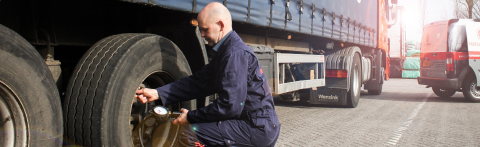
Maximum Load as a Starting Point
Maurits Bloem, Product Manager Truck Tires at Heuver:
“When customers ask us for advice on the correct tire pressure, we always base it on a loaded vehicle. Maximum load is the starting point. Trucks do not have pressure adjustment systems like agricultural vehicles. Only when a truck consistently operates below maximum load do we recommend adjusting the pressure.”
Because trucks lack pressure adjustment systems, tires must be designed and set for the heaviest load.
Risks of Incorrect Tire Pressure
Incorrect tire pressure affects handling and can cause damage. Underinflation is particularly risky because it increases heat buildup and places greater stress on the casing.
Underinflation:
-
Increased heat buildup in the casing
-
Softer steering response and reduced stability
-
Higher fuel consumption
-
Risk of blowouts due to structural deformation
-
Accelerated wear on sidewalls and shoulders
Overinflation:
-
Smaller contact patch with the road
-
Reduced stability, especially laterally
-
Uneven tread wear
-
Less comfort for driver and cargo
The ideal scenario is tire pressure that perfectly matches load and speed conditions. Proper pressure ensures safer, more stable, and more efficient driving.
Driving Behavior as an Indicator
The driving behavior of a truck is often the first indication that the tire pressure is incorrect. In the case of underinflation, the vehicle feels less stable, responds less directly to steering inputs, and may exhibit a “floating” sensation at higher speeds. With overinflation, the contact patch becomes smaller, which leads to reduced lateral stability, especially when cornering. Changes in driving comfort, directional stability, or braking performance can therefore indicate incorrect tire pressure and should be checked immediately.
How to Determine the Correct Tire Pressure
There is no universal tire pressure chart for trucks, as each manufacturer uses different constructions, casings, and load ratings. Tire pressure must therefore be based on:
-
Wheel load (kg per axle)
-
Maximum or average speed
-
Manufacturer recommendations
-
Application (regional, international, construction, distribution)
Searches like “truck tire pressure chart” can be misleading. Always use the table from the tire manufacturer, as casing differences are significant.
For technical information, see the page on tire sidewall markings.
For all truck tires by axle position, refer to our truck tire range.
Load Index for Single and Dual Fitment
Many truck tires have two load ratings, for example:
154/150 M
-
154 = load capacity in single fitment
-
150 = load capacity in dual fitment
With dual fitment, the permitted load per tire is lower. When determining tire pressure, always consider:
-
Single or dual fitment
-
Actual axle load
-
Driving speed
Incorrect interpretation of the load index can lead to overloading, increased heat buildup, and accelerated casing damage.
Also Check Maximum Rim Load
Not only the tire has a maximum load capacity — the rim does as well. When setting tire pressure, ensure both tire and rim are suitable for the axle load. Exceeding rim capacity can result in structural damage and safety risks.
Influence of Temperature and Operating Conditions
Temperature has a direct effect on tire pressure. Cold conditions reduce pressure, while heat increases it.
In addition, high speeds and heavy loads generate extra heat due to casing deformation. Therefore, tire pressure should always be checked when the tires are cold.
Regular checks are especially important in the following situations:
-
Long highway journeys
-
Heavy continuous loads
-
Changing climate conditions
Benefits of Correct Tire Pressure
Proper tire pressure ensures optimal performance. Benefits include:
-
Maximum load capacity per tire
-
Even and slower wear
-
Lower fuel consumption
-
Better directional stability and braking performance
-
Longer casing life (important for regrooving and retreading)
-
Lower fleet maintenance costs
Correct pressure reduces stress on tread, sidewalls, and casing, minimizing the risk of sudden failure.
Impact on Rolling Resistance and Fuel Consumption
Tire pressure directly affects rolling resistance. The lower the resistance, the less energy required to move the vehicle. Underinflation increases casing deformation and rolling resistance, leading to higher fuel consumption. Truck tires are classified in rolling resistance classes (A to G). Proper pressure helps keep the tire operating within its optimal efficiency range and reduces total operating costs.
Monitoring and the Future: From Manual Checks to Sensors
More and more trucks are equipped with tire pressure monitoring systems (TPMS) that provide real-time insights into pressure and temperature. These systems help detect deviations early, before damage occurs. It is expected that within a few years, a large portion of Dutch trucks will have some form of monitoring onboard. Until then, manual checks remain essential, especially with varying loads and long trips. Checking tire pressure prevents heat buildup, reduces downtime, and extends the lifespan of truck and trailer tires. Want to learn more about trucks and tire technology? Visit our truck knowledge page or explore our truck tire range by axle position.
Frequently Asked Questions (FAQ)
How many bar should a truck tire have?
That depends on wheel load and speed. Always consult the tire manufacturer’s chart.
Why is there no standard truck tire pressure chart?
Because each brand uses different casing constructions and load ratings.
How often should I check tire pressure?
At least once a week and before every long trip.
What happens with underinflation?
The tire heats up, deforms faster, and may suffer irreversible damage.
Is overinflation dangerous?
Yes, it reduces the contact patch and decreases lateral stability.