
Which truck tyre fits your application: long haul, regional or construction?
That is why manufacturers develop truck tyres for specific applications, such as long haul transport, regional transport and mixed on/off-road use. Each application requires different characteristics. Think of low rolling resistance for fuel savings, a wear-resistant tread for intensive use, or extra traction on loose surfaces.
Choosing the right truck tyre for your application helps extend tyre life, reduce fuel consumption and prevent downtime.

This article was written by Maurits Bloem
Maurits is Business Unit Manager Truck Tyres at Heuver Tyres and has many years of experience in the tyre industry. With a background in sales and team management, he is responsible for commercial performance and leading the truck tyre division. His focus is on growth and building strong, long-term customer relationships.
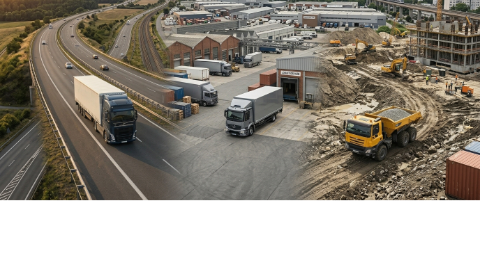
How to choose the right truck tyre for your transport?
Choosing the right truck tyre starts with a simple question: how is the truck used on a daily basis?
Transport companies use trucks in different ways. Some vehicles mainly drive long distances on motorways, while others make frequent stops or regularly operate on unpaved roads.
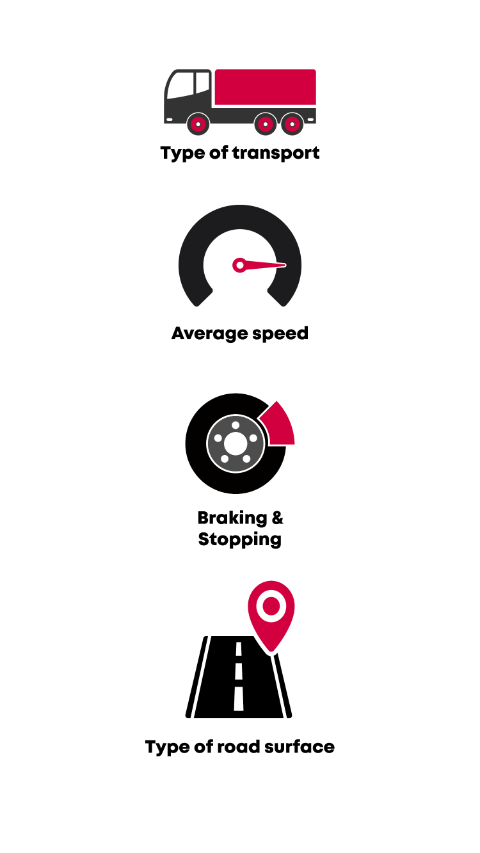
When selecting a truck tyre, the following factors play an important role:
- type of transport (long haul, regional or construction)
- average vehicle speed
- number of braking and stopping moments
- type of road surface
By combining these factors, you can determine which truck tyre best matches the vehicle’s application.
Conclusion: understanding how the truck is used allows for a more targeted tyre choice.
Why application determines tyre choice
Truck tyres are designed for specific operating conditions. The tread design, rubber compound and carcass construction are tailored to a particular type of transport.
A tyre developed for long haul transport focuses on low rolling resistance and even wear. In regional transport, the focus shifts more towards wear resistance and grip in stop-start conditions. For construction transport, traction and protection against damage are essential.
As a result, a tyre that performs well on highways may be less suitable for intensive use on construction sites.
Conclusion: the performance of a truck tyre strongly depends on its operating conditions.

Truck tyres for long haul transport
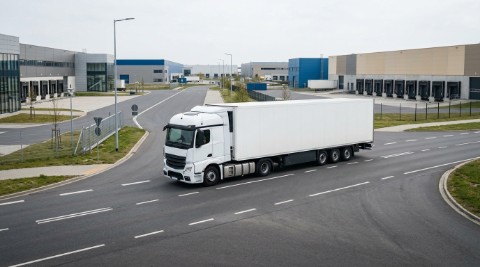
In long haul transport, trucks mainly drive on motorways and cover long distances at relatively constant speeds. The focus here is on efficiency and tyre longevity.
Truck tyres for long haul are designed with:
- low rolling resistance for fuel savings
- stable driving behaviour at higher speeds
- an even wear pattern
- limited heat build-up in the tread
The tread pattern is usually relatively closed. This reduces deformation and keeps rolling resistance low.
Conclusion: for long haul transport, tyres with low rolling resistance and even wear are the best choice.
Truck tyres for regional transport
In regional transport, conditions change. Trucks drive shorter distances and make more frequent stops, for example at distribution centres or in urban deliveries.
This leads to a different type of load on the tyre. The tyre is exposed more often to braking, acceleration and steering forces.
Therefore, regional tyres typically feature:
- a wear-resistant tread
- strong shoulders to prevent irregular wear
- good grip on wet surfaces
- a robust carcass construction
The tread pattern is often more open than long haul tyres, helping maintain grip under varying conditions.
Conclusion: regional tyres are designed for intensive use and frequent stop-start traffic.

Truck tyres for construction and on/off-road use
In construction transport, trucks frequently operate on unpaved surfaces such as sand, gravel or mud. This requires a different type of tyre.
Tyres for this application are designed with:
- high traction on loose surfaces
- resistance to cuts and damage
- reinforced sidewalls
- a self-cleaning tread pattern
These tyres have a deep, open tread with large blocks, allowing mud to clear easily and maintaining traction.
On asphalt, these tyres typically have higher rolling resistance — a logical result of their robust design.
Conclusion: construction transport requires strong tyres with maximum traction and damage protection.
Overview: differences between truck tyres
|
Transport type |
Key characteristics |
Tread |
|
Long haul |
low rolling resistance, even wear |
closed tread |
|
Regional |
wear-resistant, strong shoulders |
semi-open tread |
|
Construction / on-off |
traction, cut resistance |
open tread |
This overview shows that the design of a truck tyre is always tailored to the conditions in which a truck operates.
Conclusion: the differences lie mainly in properties that match the type of transport.
Axle position also determines the right tyre
In addition to application, axle position plays a crucial role in tyre selection.
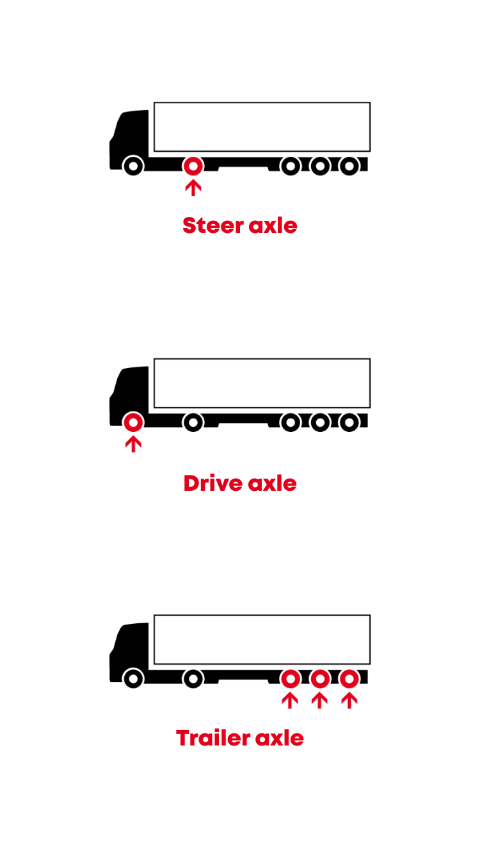
The main positions are:
- Steer axle – important for steering precision and even wear
- Drive axle – provides traction and propulsion
- Trailer axle – stability and low rolling resistance
For each axle position, specific tyres are designed to match the load and function.
Conclusion: the right tyre is determined by both application and axle position.
Heuver advice: choose tyres that match your application
Choosing the right truck tyre starts with understanding how the vehicle is used. A long haul operator requires different tyres than a truck operating daily on construction sites.
By considering application, axle position and operating conditions, you can select tyres that provide the right balance between lifespan, grip and fuel efficiency.
At Heuver, we are happy to help transport companies and tyre professionals find the right tyres for their application.
FAQ
Which truck tyre is suitable for long haul transport?
Tyres with low rolling resistance and a closed tread are usually best for long motorway distances.
What is the difference between long haul and regional tyres?
Long haul tyres focus on efficiency and long distances. Regional tyres are more wear-resistant and suited for stop-start traffic.
Why do construction tyres have an open tread?
An open tread provides better traction on loose surfaces and helps remove mud and stones.
Can one tyre be used for multiple applications?
Some tyres are suitable for mixed use, but tyres developed for a specific application generally perform better.